






Microservices Architecture
Decoupled, Resilient & Independently Scalable Distributed Systems
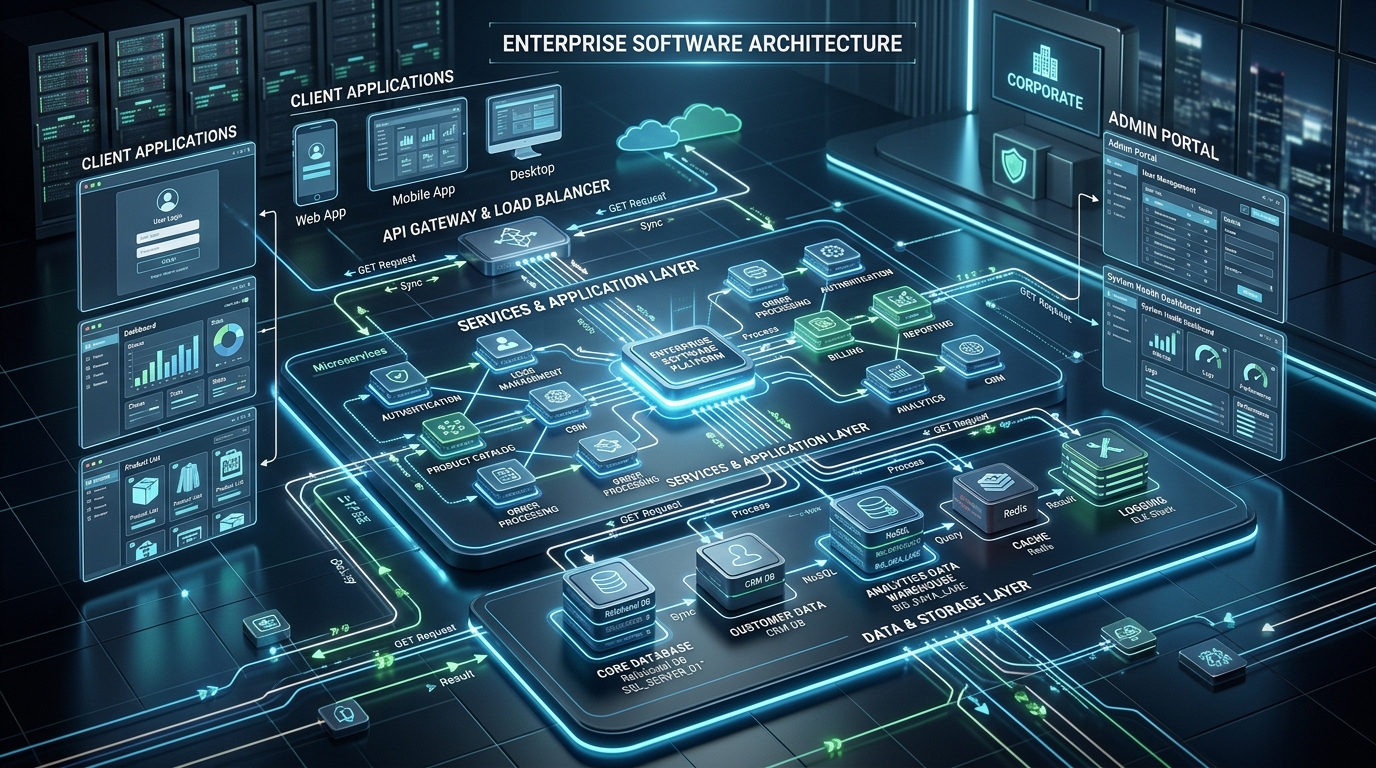
Eliminate single points of failure. We transform monolithic web applications into decoupled microservices architectures designed for massive horizontal scaling, isolated deployments, and high fault tolerance.
Core Technical Capabilities
We build custom solutions focused on performance, modular maintainability, and enterprise data security.
Event-Driven Message Brokers
Asynchronous inter-service communication using RabbitMQ, Apache Kafka, and AWS SQS message queues.
gRPC & Protocol Buffers Inter-Service RPC
High-performance binary IPC protocol for internal microservice communication with sub-10ms latency.
Database-per-Service & CQRS Patterns
Isolate database schemas per microservice with Command Query Responsibility Segregation (CQRS) and Saga orchestration.
API Gateway & Service Mesh
Centralized authentication, rate limiting, and traffic routing with Kong API Gateway and Istio service mesh.
Distributed Tracing & Centralized Logging
Full end-to-end request visibility across microservices using Jaeger, Prometheus, and Grafana dashboards.
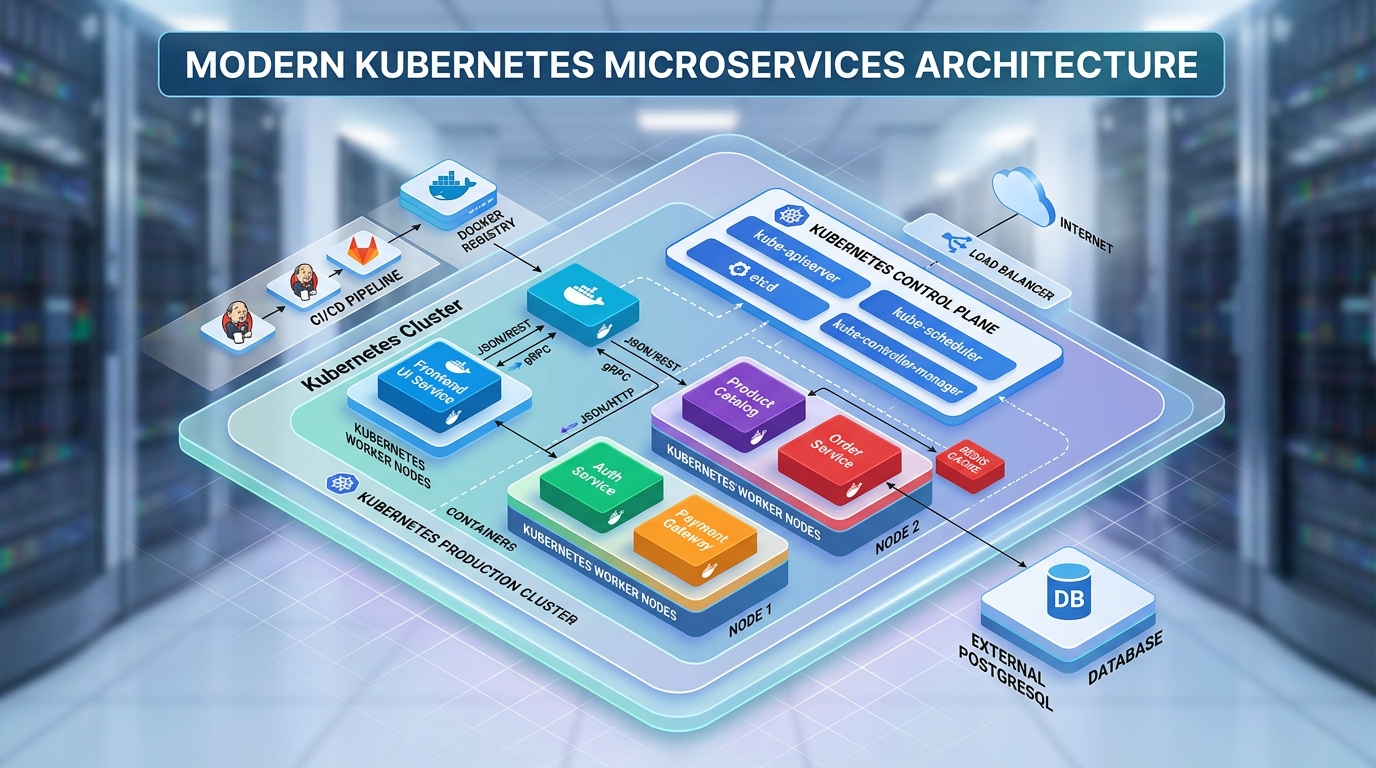
Container Orchestration with Kubernetes
Automated deployment, self-healing, and elastic scaling of microservice containers on AWS EKS or GCP GKE.
Engineered with Modern, Production-Tested Tech Stacks
Our engineering team utilizes strict property promotion, automated testing pipelines, microservices patterns, and enterprise cloud infrastructure.
verified_user Business Outcomes & ROI
- check_circle Deploy updates to individual services without redeploying the entire application.
- check_circle Independent scaling: allocate compute resources only to high-traffic services.
- check_circle Fault isolation: prevent bugs in one service from bringing down the entire platform.
- check_circle Polyglot development: use the best language/framework for each specific service task.
Enterprise Distributed Service Mesh Migration
Refactored a monolithic backend into high-throughput microservices using gRPC and RabbitMQ event queues.
Frequently Asked Questions
Common inquiries regarding our microservices architecture process.
Q1 When should a company transition from a monolith to microservices?
Microservices are recommended when your engineering team expands, different parts of your application require independent scaling, or continuous deployment bottlenecks occur.
Q2 How do you handle distributed database transactions across microservices?
We implement the Saga Pattern (orchestration or choreography) combined with outbox event streaming to guarantee eventual data consistency.
Q3 How do microservices affect infrastructure costs?
By enabling fine-grained autoscaling per microservice, you optimize server capacity utilization and reduce idle resource waste.
Ready to Build Your Microservices Architecture Solution?
Consult directly with our senior software architects. Fill out your project scope below to receive a comprehensive technical proposal, estimation, and architecture blueprint.
Request Free Technical Estimate
No category selection required—your request is pre-bound directly to Microservices Architecture.